If you are comparing winter sun destinations for a break between December and February, the Costa del Sol is usually on the shortlist with the Canary Islands, the Algarve, Madeira, Cyprus and Malta. We run El Paraíso, a self-catering apartment in Benahavís between Marbella and Estepona, and we get asked every autumn whether the coast is really warm enough in winter. The honest answer: it is mild and sunny rather than hot, the sea is too cold for most people, and it gets as much January sunshine as Tenerife on a shorter flight. This guide compares the options with real climate data, explains what a winter stay here actually feels like, and covers the practical side of wintering in Spain.
If you want the full month-by-month picture, our Costa del Sol weather by month guide has every month in detail, and Málaga weather in October and November covers the autumn shoulder season. This post is about choosing where to go for winter sun and how to spend it here.
Winter sun destinations compared: January at a glance
January is the coolest month almost everywhere in southern Europe, so it is the fairest test. These are long-term averages from the national weather services, not a forecast. Flight times are typical direct flights from London and vary by airport and airline.
| Destination | Average high | Average low | Sunshine | Rain in January | Flight from London |
|---|---|---|---|---|---|
| Costa del Sol (Málaga) | 17°C | 8°C | about 6 hours a day | 62 mm | about 2h 45m |
| Tenerife (Santa Cruz) | 21°C | 16°C | about 6 hours a day | 29 mm | about 4h 15m to 4h 30m |
| Gran Canaria (Las Palmas) | 21°C | 15°C | about 6 hours a day | 23 mm | about 4h 15m to 4h 30m |
| Madeira (Funchal) | 20°C | 14°C | about 5 hours a day | 67 mm | about 3h 45m to 4h |
| Algarve (Faro) | 16°C | 8°C | about 6 hours a day | 49 mm | about 2h 45m |
| Cyprus (Paphos) | 17°C | 9°C | about 6 hours a day | 90 mm | about 4h 30m to 5h |
| Malta (Luqa) | 16°C | 10°C | about 5 hours a day | 99 mm | about 3h |
A few things stand out. The Canaries are clearly the warmest, about 4°C warmer by day and much warmer at night, and the sea there is around 20°C in January compared with about 16°C off Marbella. On sunshine, though, Málaga Airport logs about 183 hours in an average January, almost the same as Santa Cruz de Tenerife at about 188. The Algarve is the closest match to the Costa del Sol on temperature, while Cyprus and Malta get noticeably more rain in midwinter and are further away.
Is the Costa del Sol a good winter sun destination?
Yes, if you want sunny days for walking, golf, sightseeing and long lunches outside, and you do not need a swimming beach. It is not the right pick if winter sun for you means lying on a sunbed and swimming in the sea. A simple way to choose:
- Choose the Costa del Sol for a short flight, mild sunny days, a huge choice of golf, real Spanish towns that stay lively all year, cities like Málaga and Ronda within reach, and good value outside the Christmas weeks.
- Choose the Canaries if beach and pool time is the whole point. You trade a longer flight for warmer air, warmer evenings and a sea you can swim in.
- Choose the Algarve if you want a similar climate with an Atlantic coastline. It is a sibling of the Costa del Sol rather than an upgrade.
- Choose Cyprus or Malta if you are drawn to their history and do not mind a longer trip and a wetter January.
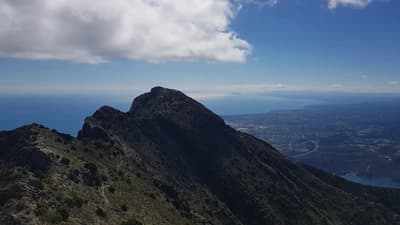
One more thing the table does not show: the Costa del Sol is sheltered by the Sierra Blanca and Sierra Bermeja mountains, which is a big part of why the stretch between Marbella and Estepona feels so mild for its latitude.
What winter sun on the Costa del Sol really feels like
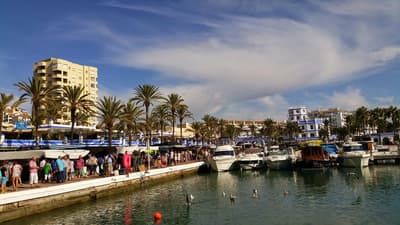
The Costa del Sol weather in December is typically around 18°C by day and 9°C at night. It is also the wettest month, with about 88 mm of rain at Málaga Airport over five or six days, but rain tends to come in short bursts with clear, bright days in between. Marbella weather in December is very close to Málaga's, and on a sunny afternoon the promenade is full of people walking in shirtsleeves.
The Costa del Sol weather in January is the coolest of the year, with highs of about 17°C and lows around 8°C, and it is the quietest month for crowds. February is a touch warmer and sunnier, and the almond trees blossom in the hills inland.
Daylight
Málaga is a long way south of the UK, which you feel in the light. On the shortest day of the year the sun is up for about 9 hours 39 minutes in Málaga, with sunrise around 8:25 and sunset just after 18:00. In London the same day gives you under 8 hours.
Sun by day, a jumper at night
The winter sun here is stronger than it feels, so sunglasses and sunscreen are still worth packing, especially for golf. Lunch on a terrace is often perfectly comfortable. Once the sun goes down, though, it cools quickly. El Paraíso sits a little inland and higher than the seafront, so evenings there are fresher than on the beach. Spanish homes are built to stay cool in summer, with tiled floors and thick walls, so bring a warm layer and something for your feet.
Things to do in winter near El Paraíso
Winter is not a closed season here. People live on this coast all year, and the restaurants, shops, markets and golf courses keep going. Some beach clubs close for the winter, and that is about it.
Golf in the low season
Mild, dry days make winter good golf weather, and December and January are quieter on the tee sheet than the spring and autumn peaks. El Paraíso Golf Club is just down the road, with dozens more courses within an easy drive. See our guide to golf near El Paraíso and Benahavís, and if you are planning a trip around golf, how to plan a Costa del Sol golf break.
Walking, white villages and Ronda
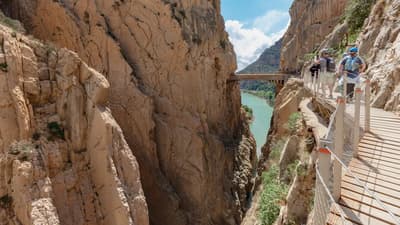
The cooler months are the best time for walking and sightseeing inland, when a hillside path in the sun is a pleasure rather than a slog. Start close to home with our Benahavís village guide, then head into the mountains to the white villages near Benahavís or take a Ronda day trip. Ronda sits much higher than the coast and is several degrees colder in winter, so take a proper coat.
Málaga at Christmas
Málaga city is about an hour's drive (roughly 75 km) from El Paraíso, and in December it is worth the trip after dark. The Christmas lights on Calle Larios are famous across Spain, with a light and music show several times an evening. In 2025 the lights went on on 28 November and the show ran until 4 January, with sessions at 18:30, 20:30 and 22:00. Check the Málaga city council programme for this year's dates. By day, the city's museums make a good plan for a rainy day.
Three Kings, carnival and almond blossom
Christmas in Spain runs through to 6 January. On the evening of 5 January towns along the coast hold their Cabalgata de Reyes, a parade where the Three Kings throw sweets to the crowds, and 6 January is a public holiday. In February, Málaga's carnival fills the streets with costumes and music, and the almond blossom turns the inland hills white and pink in late January and February.
Snow in the Sierra Nevada
If you fancy a day or two on the slopes, the Sierra Nevada ski resort above Granada is about 230 km from El Paraíso, roughly three hours by car. The resort has announced its opening event for the 2026/27 season on 6 December 2026, and the season usually runs into April, snow permitting. It is a long day trip, so many people stay a night in Granada and see the Alhambra too.
Old towns and quiet beaches
Winter is the nicest time to wander the old towns without summer crowds. Try Marbella Old Town for orange trees and tapas, Estepona for its flower-pot streets and long promenade, or Mijas Pueblo for views along the coast. A walk on an empty beach in the January sun is one of the simple pleasures of a winter here. For more ideas, see our things to do in Marbella roundup.
Wintering in Spain: long stays on the Costa del Sol
Plenty of visitors come for a month or more, swapping a northern winter for a slower routine in the sun. A few practical points if you are thinking about wintering in Spain:
- How long you can stay. UK and other non-EU visitors can stay in the Schengen area, which includes Spain, for up to 90 days in any 180-day period without a visa. Staying longer needs a Spanish visa or residence permit.
- Border checks. The EU Entry/Exit System (EES) has been running since 12 October 2025, so non-EU passport holders register fingerprints and a photo at the border. The separate ETIAS travel authorisation was not yet in operation as of October 2026, so do not pay any website that claims to sell one. Check GOV.UK or the official EU travel site before you book.
- Healthcare. UK residents can use a GHIC for necessary state healthcare in Spain, but take out travel insurance as well.
- A car makes life easy. El Paraíso is in the hills, and buses are not practical for daily life. Our car rental in Benahavís guide covers hiring at the airport, and Málaga Airport to El Paraíso covers the first drive.
- Everyday life. Supermarkets, pharmacies, cafés and restaurants in San Pedro, Marbella and Estepona are open all winter. For eating out close to the apartment, see our guide to restaurants in Benahavís and around El Paraíso.
- Pack for two climates. Light clothes for sunny afternoons, plus a warm jumper or light padded jacket, a compact umbrella and comfortable walking shoes.
Winter sun FAQ
Is the Costa del Sol warm in winter?
It is mild. Average highs are around 17 to 18°C from December to February, with about 6 hours of sunshine a day in January. Nights drop to around 8 or 9°C.
Can you swim in the sea in winter?
Only if you like it bracing. The sea off Marbella is around 16°C in January and February. A few hardy swimmers go in, but most people stick to walking on the beach.
Is Tenerife warmer than the Costa del Sol in winter?
Yes. Santa Cruz de Tenerife averages about 21°C by day in January against about 17°C in Málaga, and the sea is around 20°C. The sunshine hours are very similar, and the flight to Málaga is more than an hour shorter.
Which is the best winter month on the Costa del Sol?
February is a good bet, with a little more warmth and sunshine than January and almond blossom inland. Choose December if you want the Christmas lights and festive atmosphere, and January if you want the quietest roads and golf courses.
How long can I stay in Spain for the winter?
Non-EU visitors, including UK passport holders, can stay up to 90 days in any 180-day period without a visa. For longer stays you need a Spanish visa or residence permit.
Plan your winter stay
El Paraíso is a calm winter base with golf views, a sunny outdoor dining space and the coast, the mountains and Marbella all a short drive away. Check dates for a winter break or a longer stay on our homepage or on the Airbnb listing.
Written by Mex Smits
Climate figures are long-term January averages from national weather services, as published in climate tables: AEMET 1991 to 2020 normals for Málaga Airport, Santa Cruz de Tenerife and Gran Canaria Airport (Gran Canaria sunshine from AEMET 1981 to 2010), IPMA 1991 to 2020 normals for Faro and Funchal, WMO 1991 to 2020 normals for Paphos, and 1981 to 2010 averages for Luqa, Malta. Sea temperatures: seatemperature.org averages. Daylight: timeanddate.com. Flight times are approximate. Entry rules can change, so always check official sources before you travel.
Hero photo: palm trees on Marbella beach on 24 December, by Peter & Michelle S, via Wikimedia Commons, licensed CC BY 2.0 (resized).